
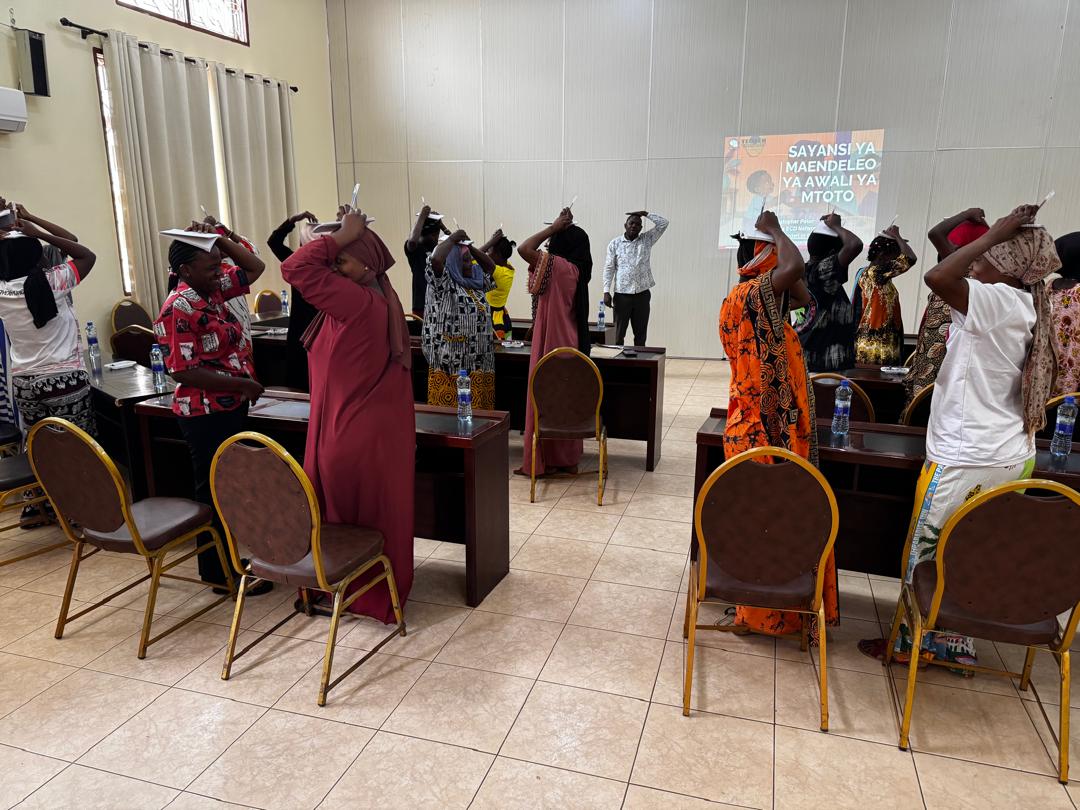
Morogoro, Tanzania — The Tanzania Early Childhood Development Network (TECDEN), in partnership with the Conservation, Hotels, Domestic and Allied Workers’ Union (CHODAWU) through the Care Initiative, has strengthened the capacity of 23 domestic workers in Morogoro through training on the Science of Early Childhood Development (ECD).
The training is part of efforts to strengthen the knowledge and skills of caregivers who play an important role in children’s daily lives and to promote greater integration of ECD into skills development and the wider childcare workforce.
Strengthening everyday caregiving practices
Domestic workers can spend considerable time caring for young children, particularly within household settings. Their daily interactions and caregiving practices can therefore influence children’s early learning, social-emotional development, communication, safety and overall well-being.
The training equipped participants with practical knowledge on:
Child growth, development and developmental milestones;
Responsive and nurturing caregiving;
Play and early learning;
Positive communication and interaction with children;
Positive discipline and age-appropriate responses;
Creating safe, protective and stimulating environments; and
Supporting children’s cognitive, social, emotional and physical development.
The approach recognises that quality childcare is not limited to meeting children’s basic needs. Children also need responsive relationships, opportunities to play and learn, protection, stimulation and consistent support to develop to their full potential.
Connecting skills development with Early Childhood Development
The initiative provides an important opportunity to connect vocational skills development with Early Childhood Development.
CHODAWU’s engagement with domestic workers creates a platform through which ECD knowledge can be incorporated into the competencies of workers involved in childcare. This can help strengthen the quality of care provided within households while contributing to broader recognition of childcare as work that requires knowledge, skills and appropriate working conditions.
This approach is also consistent with the principles of ILO Convention No. 189 on Decent Work for Domestic Workers, which recognises the rights and dignity of domestic workers and the importance of appropriate skills and protections within domestic work.
Contributing to Tanzania’s multisectoral ECD agenda
Tanzania’s Early Childhood Development agenda recognises that children’s development is influenced by multiple sectors and environments, including households, communities, health and nutrition services, education, social protection and the labour sector.
Strengthening the capacity of domestic workers therefore contributes to the broader National Multisectoral Early Childhood Development Programme (NM-ECDP) by extending ECD knowledge beyond formal early learning settings and into the homes and communities where children spend much of their early years.
For TECDEN, this initiative reinforces the importance of building a knowledgeable, skilled and supported ECD workforce across different sectors and settings.
From training to practice
A key objective of the training was to ensure that participants could translate ECD knowledge into everyday caregiving practices.
One participant reflected:
“Before this training, I thought caring for a child was mainly about feeding and keeping them safe. Now I understand that talking, playing, listening and responding to children are just as important for their development. I will apply these lessons every day in my work.”
The reflection highlights an important shift in understanding: caregiving is not simply about supervision; everyday interactions can become opportunities for learning, communication, emotional connection and development.
Investing in caregivers, investing in children
The training of 23 domestic workers represents a practical investment in the people who interact with children every day. By strengthening their knowledge and skills, the initiative has the potential to influence the quality of care experienced by children and families beyond the training room.
It also demonstrates the value of collaboration between ECD actors, workers’ organisations and skills-development institutions in building a stronger and more responsive childcare workforce.
As Tanzania continues to advance its multisectoral ECD agenda, initiatives that bring ECD knowledge closer to families, caregivers and communities remain critical.
Quality childcare requires knowledge, skills and supportive environments. Investing in caregivers is investing in children—and investing in children is investing in Tanzania’s human capital and future.