
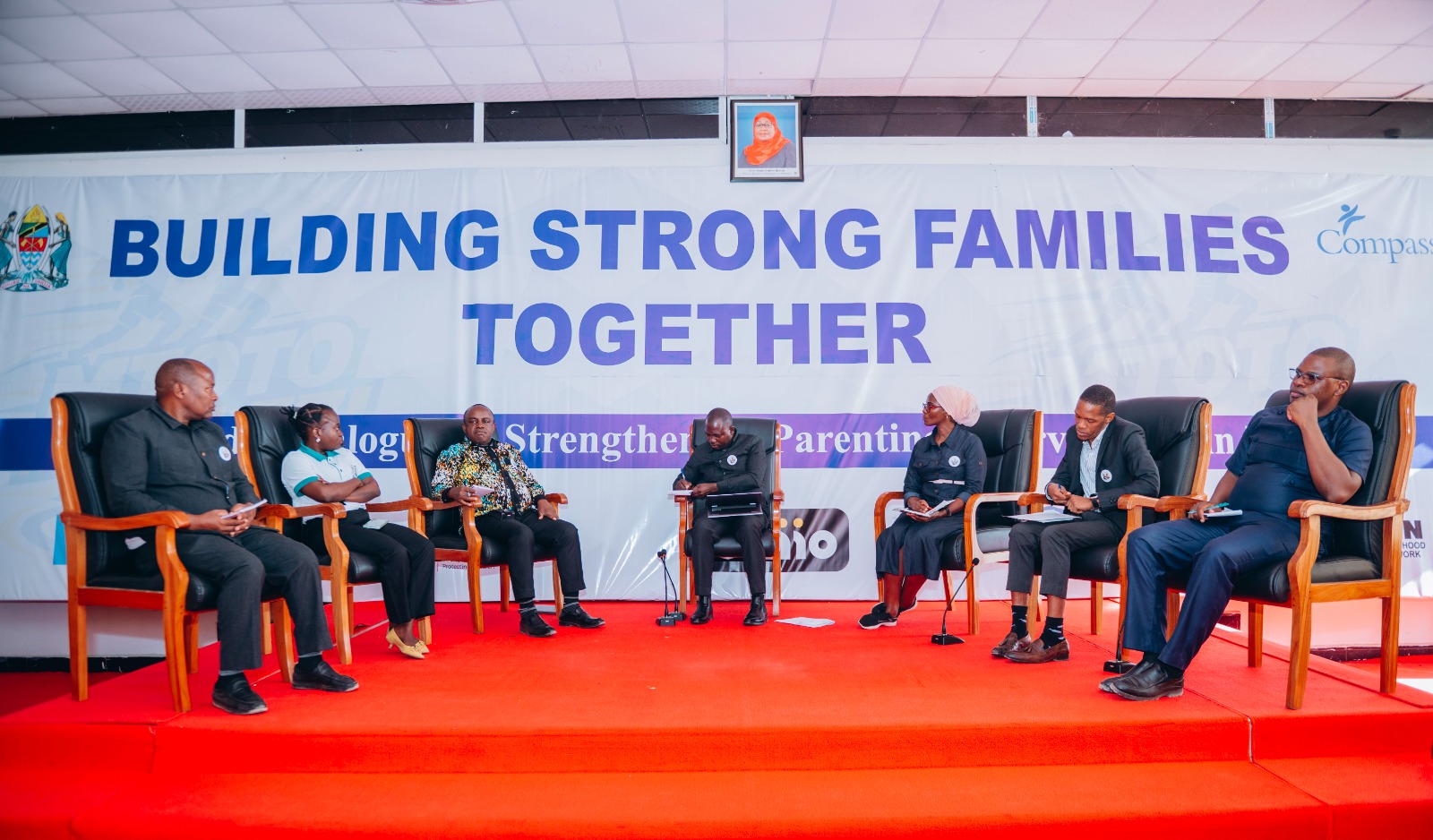
Mwanza, Tanzania (4 September 2026) – Government institutions, civil society organizations, development partners, faith leaders, parents, caregivers, young people and children gathered in Mwanza for the Mtoto Ni Malezi Stakeholders Dialogue, calling for strengthened collaboration and investment in parenting interventions as a critical pathway to improving child well-being and advancing Early Childhood Development (ECD) in Tanzania.
Convened under the theme “Building Families Together: Stakeholders Dialogue on Strengthening Parenting Interventions in Tanzania,” the event provided a platform for stakeholders to reflect on progress, share evidence and experiences, and identify practical actions that can strengthen families and improve outcomes for children across the country.
The dialogue was organized as part of the broader Mtoto Ni Malezi movement, which promotes positive parenting, nurturing care, child protection, and shared responsibility for ensuring every child has the opportunity to thrive.
Bringing Together a Diverse Coalition for Children
The dialogue brought together a wide range of actors working to support children and families, including representatives from TECDEN, Beyond Inclusion, AMAN Girls Organization, Tanzania Early Childhood Education Consortium (TECEC), Uzao Wetu, Compassion International Tanzania, ICS, SOS Children’s Villages Tanzania, National Institute for Medical Research (NIMR), Girls Talk Organization, Save the Children, World Vision Tanzania, Plan International Tanzania, the Prime Minister’s Office – Regional Administration and Local Government (PMO-RALG), and the Ministry of Community Development, Gender, Women and Special Groups (MOCDGWSG).
Religious leaders, parents, caregivers, and children representatives also contributed their perspectives, underscoring the importance of inclusive dialogue and shared responsibility in strengthening parenting and child development interventions.
Investing in Children’s Earliest Years
Opening the dialogue, participants emphasized that investing in children’s early years is one of the most effective ways to strengthen human capital and support sustainable national development.
“Investing in children during their earliest years is one of the most effective investments we can make for Tanzania’s future. Strong families, informed parenting, and quality early childhood development services are essential foundations for lifelong learning, well-being, and national development,” a TECDEN representative noted.
Participants highlighted the central role of families in shaping children’s development and stressed the need for policies, programmes, and systems that support parents and caregivers to provide nurturing care, protection, and responsive parenting.
Key Commitments for Strengthening Parenting Interventions
Discussions during the dialogue resulted in a set of collective commitments aimed at strengthening parenting interventions and improving outcomes for children and families in Tanzania.
Stakeholders committed to:
1️⃣ Strengthening national coordination of parenting and child development interventions.
2️⃣ Promoting safe and nurturing environments and strengthening protection for children, particularly those in vulnerable situations.
3️⃣ Expanding evidence-based parenting approaches and ensuring research informs policies, strategies and programmes.
4️⃣ Improving implementation and accountability through harmonised approaches, stronger monitoring and context-responsive interventions.
5️⃣ Advancing inclusive parenting by amplifying children’s voices and increasing the meaningful participation of fathers and male caregivers.
6️⃣ Strengthening parenting education within education systems and promoting positive, non-violent discipline.
7️⃣ Strengthening families and community support systems to create environments where children can learn, develop and realise their potential.
8️⃣ Mobilising sustainable resources for parenting, child protection and ECD.
9️⃣ Strengthening child protection and positive values, including stronger engagement of families, communities and faith leaders.
🔟 Taking collective action to prevent children from living on the streets, including public awareness against giving money to children on the streets while promoting safe and protective alternatives.
A Shared Responsibility
Participants emphasized that strengthening parenting requires coordinated action across sectors and institutions.
“Positive parenting is not only a family responsibility but a shared national responsibility. Every institution, community, and leader has a role to play in ensuring children grow up in safe, nurturing, and protective environments,” a government representative stated.
Faith leaders also highlighted the importance of strengthening family values and community support structures.
“Strong families build strong communities. When parents, caregivers, faith institutions, and communities work together, children are more likely to grow up safe, valued, and equipped to reach their full potential,” a faith leader remarked.
Development partners urged stakeholders to transform commitments into measurable action.
“The true measure of our success will not be the commitments we make today, but the actions we take tomorrow. Through collaboration among government, communities, families, faith leaders, and development partners, we can create lasting change for every child,” a partner representative noted.
From Dialogue to Action
The dialogue concluded with a renewed commitment to strengthening coordination, increasing investment in parenting interventions, and building sustainable systems that support children and families.
For TECDEN and its partners, the event reaffirmed a shared vision: every child deserves the opportunity to grow up in a safe, nurturing, and supportive family environment.
Moving forward, stakeholders will continue working together to translate the dialogue’s commitments into concrete actions that strengthen families, promote child protection, and advance Early Childhood Development across Tanzania.